
How Custom Woven Labels Elevate Corporate Gifts for Lasting Impressions
Small branding details can have outsized effects on how a corporate gift is perceived. Woven labels provide a durable, tactile brand touchpoint that stays with the item through wear and washing, creating repeated exposures that reinforce quality and credibility long after unboxing.
What makes woven labels a meaningful upgrade for corporate gifts?
Woven labels go beyond decoration by delivering a tangible signal of craftsmanship, color fidelity, and brand governance. They outlast many other branding elements and offer repeat visibility every time the recipient uses the item. Key factors include:
- Durability and long life: woven labels tend to endure through repeated use, contributing to ongoing brand exposure.
- Color and detail: high-denier threads and damask or satin weaves support crisp logos and legible microtext at small sizes, with support for multiple woven colors.
- Controlled branding at small scale: precise Pantone matching and color proofs help reproduce brand identity at label scale, avoiding miscoloring.
- Tactile quality signals: texture, stitch quality, and edge finishes communicate care and specification control even before the recipient reads care instructions or logos.
- Placement and permanence: fold types and placement choices affect visibility, wearability, and the perceived value of the gift.
Practical implications include lead times and MOQs that influence planning. Domestic woven runs often finish in 1–2 weeks, while overseas runs plus shipping commonly extend to 3–5 weeks. Standard production timelines for woven labels can range from about 7–14 days, with some suppliers offering longer or shorter windows depending on volume and options.
How can agencies ensure quality control so the delivered product matches the brief?
Quality control should turn subjective expectations into objective, auditable gates. A repeatable QC playbook ensures alignment from proto-sample through shipment and reduces the risk of miscommunication at the final handoff.
- Assign a single label owner who signs off on the final acceptance, avoiding conflicting approvals.
- Codify measurable acceptance metrics in the contract, requiring concrete evidence (photos, batch codes, test results) before shipment.
- Establish a timebound escalation ladder so approvals stay on schedule and remediation is clearly attributed to the responsible party.
- Define an evidence standard for pre-shipment approval, including a minimum pack of photos, video of roll orientation, batch identifiers, and a retained sample per lot.
- Map standardized QC checkpoints across the lifecycle (feasibility note, proto-sample, first-article check, inline sampling, pre-shipment audit) to create discrete, auditable gates.
- Adopt a digital workflow: sign-off forms in project tools, mandatory evidence uploads, and integrated inspection reports with the order records.
These controls reduce variance, clarify accountability, and enable faster remediation when issues arise. If a high-risk or regulated context is involved, consider third-party pre-shipment inspections and attach the report to the order for added assurance.
How should client expectations and timelines be set for woven-label projects?
Set expectations with a published milestone plan that names owners, required evidence for each gate, and short approval SLAs. Proactive communication using consistent templates at every handoff reduces late surprises and speeds decision-making.
- Milestone 0: Kickoff and locked specs — final briefs, vector artwork reference, Pantone list, and legal copy confirmation.
- Milestone 1: Artwork preflight confirmed — feasibility note on thread/color limits and required design changes.
- Milestone 2: Proofs shared — digital proof and/or physical proto with signoff window.
- Milestone 3: Client signoff — timestamped approval to begin bulk production.
- Milestone 4: Production start — PO, production schedule, color lot codes, ship window.
- Milestone 5: First-article / inline QC — photos/video of initial pieces, batch ID, remediation plan if needed.
- Milestone 6: Pre-shipment evidence and acceptance — full evidence pack and signed acceptance before shipment.
- Milestone 7: Shipping and delivery — tracking and ETA to the receiving facility.
- Milestone 8: Post-delivery review — quick feedback and retention-sample confirmation.
Timing benchmarks to publish include: digital proofs typically 48 hours, proof turnaround with samples can add time, bulk production often 1–2 weeks domestically or 3–5 weeks overseas depending on scope and shipping. A filled-out one-pager with explicit owner assignments and expected sample-to-production lead times helps reduce misalignment.
How can agencies measure and improve their custom woven label project outcomes?
Adopt a concise set of outcome and process KPIs, collect structured client and partner feedback, and run quick retrospectives to convert failures into concrete workflow improvements. A data-driven loop reduces rework and shortens cycle time while boosting satisfaction.
- Cycle time: track specs-to-sample and signoff-to-production intervals; aim for short, predictable lead times.
- Approval speed: measure the median time for named approvers to sign off on proofs and evidence; tighten SLAs over time.
- Quality outcomes: monitor QC pass rates, defects per lot, and adherence to evidence packs.
- Supplier performance: track on-time delivery, evidence completeness, and responsiveness.
- Client experience: gather post-delivery CSAT scores and note whether post-delivery remediation is needed.
Capture feedback objectively by standardizing the evidence pack, implementing short client CSAT forms after delivery, and requiring operational feedback from suppliers and 3PLs. A compact project health dashboard helps surface exceptions early and drive proactive remediation.
Why does the smallest detail matter in corporate gifting?
The smallest details influence perceived care, credibility, and long-term brand memory. A well-executed woven label signals intentional design, careful sourcing, and governance, which together elevate the gift beyond generic merchandise.
- Tactile signals: texture, fold, and edge finishing communicate quality before anyone reads the text on the label.
- Repeated exposure: internal woven labels become visible touchpoints every time the recipient uses the item, reinforcing brand recall.
- Credibility cues: origin statements, care instructions, or certifications on the label can boost trust in sustainability and provenance claims.
- Exclusivity feel: small serials, unique colorways, and limited editions transform the label into a perceived artifact of care and customization.
To maximize impact, specify material, weave, color fidelity, and placement, and consider whether a tagless option is appropriate for comfort or whether a sewn-in label better supports durability and perceived value.
How can the right woven label design help stand out and reinforce brand identity?
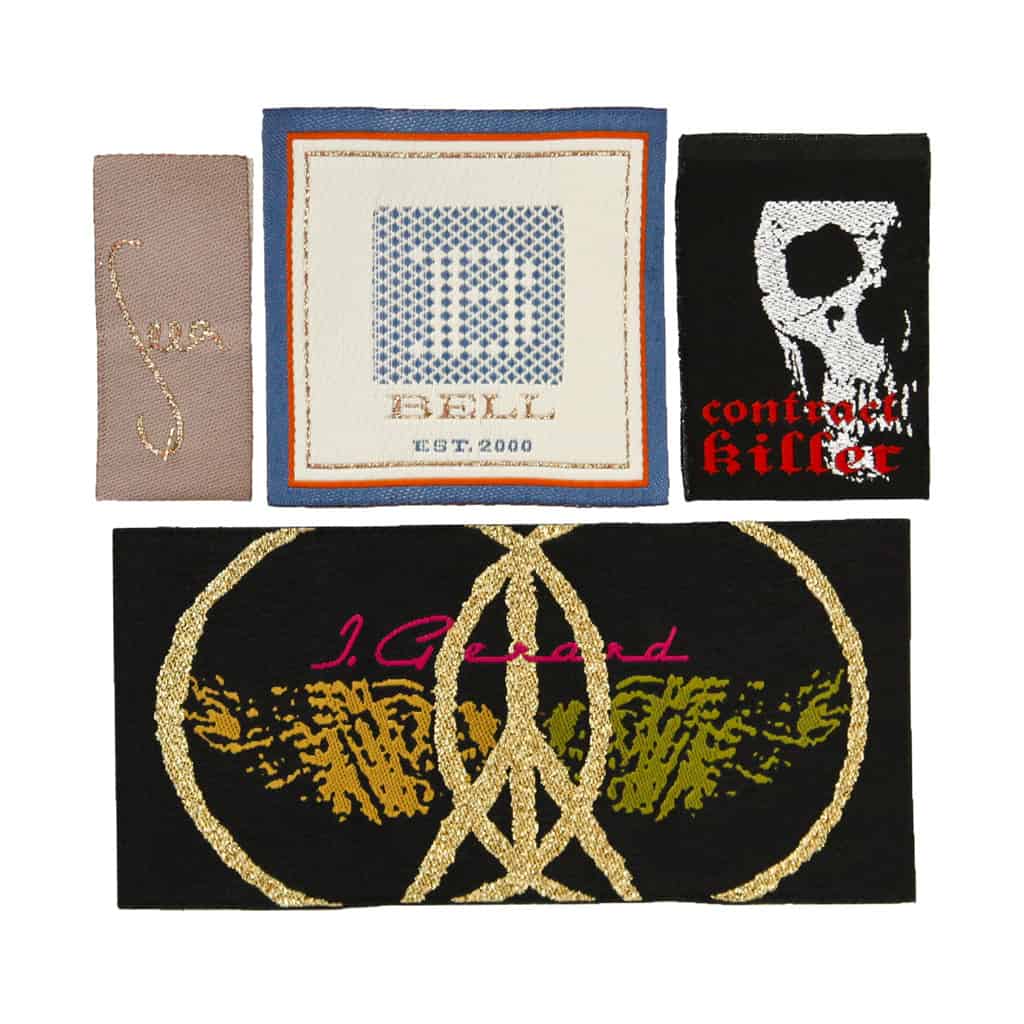
A thoughtfully designed woven label makes a corporate gift feel intentional and aligned with the item it brands. Design considerations include material, color control, weave, thread density, label size, fold, placement, and attachment method. A well-briefed label can deliver a lasting brand cue without overwhelming the recipient.
Key design levers include:
- Color fidelity: Pantone references or spectrophotometer targets; support for up to 12 woven colors enables complex logos in-thread.
- Material and weave: damask for premium hand-feel and durability; satin for a glossy finish; recycled yarns for sustainability claims.
- Thread density and legibility: minimum microtext width around 2 mm helps keep fine details readable.
- Logo placement: discreet internal branding versus visible external marks changes how often the brand is seen and recognized.
- Fold and edge finish: center-fold, end-fold, or straight-cut with edge sealing to reduce fraying and preserve a neat appearance.
- Attachment method: sew-on for permanence and perceived quality; tagless or heat-transfer for comfort in wearables.
- Message content: select what to carry on the label (brand logo, care, origin, certification marks) to communicate provenance or sustainability when relevant.
Practical spec checklist to brief your supplier:
- Final label dimensions and orientation
- Artwork files, Pantone codes, and color count (up to 12)
- Material and weave choice (damask, satin, or recycled options)
- Thread denier (50/75/100) and minimum microtext width
- Fold type and edge finish, plus attachment method
- Legal copy or certifications to include
- Order quantity forecast and lead time targets
- Proof and pre-production sample requirements
Different industries may favor different configurations: luxury gifts for premium branding often use damask with folded sewn labels; comfort-focused items may lean toward tagless options; sustainability-focused campaigns may prefer recycled yarns and clear certification marks.
Are there real-world examples of woven labels making a measurable difference in corporate gift campaigns?
Direct, label-only case studies are rare, but program-level evidence shows that upgrading to woven or stitched branding in higher-quality kits correlates with better recipient response and longer use. What is publicly available includes galleries and technical specs from label suppliers, sustainability-focused label options, and industry reporting on a shift toward higher-quality branding in corporate gifting.
- Supplier galleries and project notes show the range of options and typical lead times for weaving and finishing, used by brands when moving to woven labels for promotional apparel and gifts.
- Use of recycled yarn woven labels demonstrates demand for sustainability in campaigns that emphasize corporate values.
- Industry reports indicate a broader move toward fewer, higher-quality gifts and increased adoption of sewn or embroidered branding as part of premium programs.
To create verifiable proof, run a controlled pilot: two otherwise identical gift sets differ only in label type (woven/embroidered sewn label vs standard printed tag or no woven label). Measure short-term recipient satisfaction, longer-term usage, and qualitative feedback. Present results as before/after findings with raw counts and response rates to quantify impact.
How do premium woven labels reflect your company’s attention to detail and professionalism?
Premium woven labels communicate specification discipline, supplier governance, and thoughtful product planning. They signal to procurement, legal, and partners that branding and compliance were considered before production, reducing downstream risk and reinforcing professionalism.
- Specification discipline: using high-density damask or satin with defined Pantone values and fold types demonstrates deliberate briefing and control.
- Governance and compliance: including origin statements or certification marks on the label helps ensure compliance and reduces remediation risk.
- Traceability and proofs: matching proofs and batch identifiers on labels show robust quality control and documentation.
- End-user experience: attachment method and placement choices affect comfort and readability, reinforcing the professional tone of the gift.
Practical signs of professionalism include a documented tech pack, clear MOQs and lead times, and the ability to provide color-matched proofs and a 1:1 proto before bulk production. These controls contribute to predictable timelines, fewer reworks, and stronger stakeholder confidence.
Can woven labels add exclusivity and sustainability to corporate gifts?
Yes. Woven labels can deliver exclusivity through serialized editions, unique weaves, and limited color palettes, while also supporting sustainability goals via recycled yarns and certifiable supply chains.
- Exclusivity design: add serialized codes, edition numbers, or campaign-specific colorways to create a sense of scarcity and authenticity.
- Sustainability options: specify recycled yarns and require certification like chain-of-custody proofs to verify sustainable claims.
- Durability and longevity: woven labels last longer than printed tags, reducing waste and extending brand exposure.
- Packaging alignment: pair woven labels with eco-friendly packaging to reinforce the sustainability narrative.
When planning exclusivity and sustainability, consider supplier MOQs and lead times. Some suppliers require a minimum quantity that may influence whether a limited edition is feasible; if MOQs are high, pairing a woven label with a smaller, lower-cost labeling option for other kits can be a practical compromise.
What are the next steps for agencies and suppliers looking to upgrade with custom woven labels?
Begin with a compact, production-ready tech pack and a supplier shortlist, validate with a rapid proto run, and present a concise client-facing proposal with options and cost differentials.
- Source quickly: use low-MOQ suppliers for rapid pilots and free 1:1 digital proofs; scale with reliable woven-capable manufacturers for program runs.
- What to include in a tech pack: product context, final dimensions, vector artwork, Pantone targets, color count, material/weave, thread denier, microtext width, fold/finish, attachment method, legal text, quantity forecast, lead time, and proof requirements.
- Designer briefing tips: provide vector artwork, Pantone codes, and demonstrate how the woven design will render at actual label dimensions; ask for proofs that reflect scale and legibility.
- Supplier evaluation: assess MOQs, lead times, color capabilities, material options, certifications, proof policy, and pricing transparency.
Next steps: create a one-page tech pack, shortlist three suppliers (one low-MOQ, one capable OEM, one sustainability-focused), request proofs and exact lead times, order a physical proto, and present a three-slide client brief that compares options, costs, and timelines. If needed, run a quick pilot with a high-use SKU to validate look and fit before scaling.
How can elevating the finishing touch give you a long-term competitive edge in corporate gifting?
Elevating the finishing touch turns a disposable gift into a durable brand artifact. The long-term edge comes from repeated, low-effort brand exposures, increased perceived quality, and stronger credibility with stakeholders.
- Longer life and repeated impressions: woven labels survive use, multiplying brand exposure beyond the unboxing moment.
- Quiet branding with impact: subtle, well-executed branding communicates sophistication without feeling promotional.
- Program alignment and recognition value: finishing touches align with recognition programs and premium gifting strategies, supporting retention and positive brand associations.
To demonstrate lift, run a controlled pilot on a single high-use SKU, gather quick recipient feedback, and capture usage signals over 30 to 90 days. Use the results to justify broader rollout and to refine the tech pack and supplier shortlist for future campaigns.
Closing note
In corporate gifting, the finishing touch matters. A well-planned woven label program—balanced with clear governance, measurable evidence, and sustainability considerations—creates a durable brand cue that strengthens trust, recall, and perceived value. Start small with a pilot, measure the impact, and scale when the data shows a meaningful lift. If you’d like help turning this into a pilot plan for your next gift program, identify a high-use SKU and request a woven-label proto from a low-MOQ supplier to validate look and fit.