


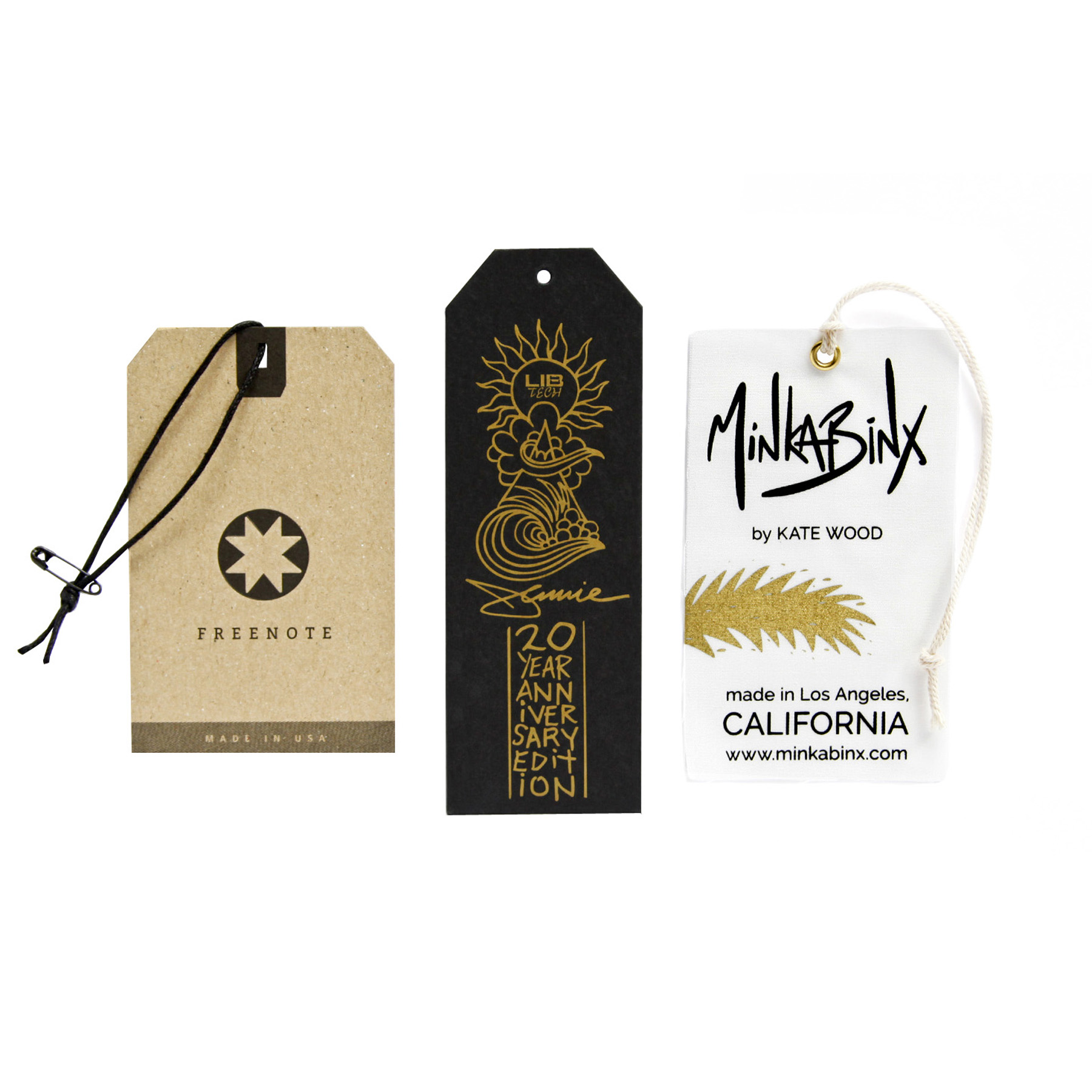
Custom Hang Tags for Accessories: A Guide for Boutique Luxury Designers
Why do luxury accessory brands need custom hang tags even for small collections?
How can a small-run hang tag feel luxurious without overspending?
Make smart print and material choices and focus on one or two premium cues. Digital printing is ideal for shorter runs, while a single high-impact finish keeps costs predictable and the look refined.
What to prioritize:
- One focal luxe treatment: a touch of foil, a subtle spot UV, or a delicate blind deboss on the logo or edge can read as luxury without exhausting the budget.
- Perceived heft: use a heavier stock or a duplex construction and a tactile finish to create a premium handfeel that outperforms multiple light effects.
Practical production choices for small runs:
- Use short-run digital printing to avoid tooling fees and enable color-rich designs; standard shapes reduce die costs.
- Prefer one premium finish and a single high-impact area rather than many costly extras.
- Limit printed copy on the face and move care/provenance to a QR destination to keep the tag clean and elegant.
Material and finish options that maximize impact per dollar:
- Choose one high-impact finish (spot UV, foil, or soft-touch lamination) on a solid stock to attract attention without overdoing it.
- Consider textured or natural stocks (kraft, linen, or pearl metallic) to add character without extra add-ons.
Cost realities to plan for small volumes:
- Expect higher per-unit costs at very small volumes, with typical ranges varying by stock and finish.
- Prioritize one premium detail and a heavier board to maximize ROI as you scale.
What materials and finishes make hang tags feel truly luxurious?
Go with a substantial board and a single, carefully placed finish. A single focal finish paired with a premium stock reads as luxury while staying within budget and supporting sustainability goals.
Why these elements matter:
- Weight and rigidity affect value perception. Thicker boards and duplex constructions create a premium hand-feel and presence in photos.
- Finish guides attention. A single focal finish on a logo or edge communicates intentional luxury without overwhelming the design.
- Sustainability without sacrifice. Recycled or kraft stocks paired with restrained metallic or deboss finishes can read premium while signaling eco credentials.
Practical pairings that read luxury:
- Smooth stock with selective foil on the logo for sharp contrast.
- Duplexed board with painted or colored edge and blind deboss for depth.
- Pearly or metallic-coated stock with tone-on-tone spot UV for subtle shine.
- Kraft or recycled stock with a narrow copper foil accent and natural cord for an artisanal feel.
- Cotton or rag stock with blind deboss and a gilded edge for archival quality.
- Textured duplex with soft-touch laminate and a restrained metallic foil for a modern luxe look.
Finish selections and when to use them:
- Soft-touch lamination for a velvety feel and fingerprint resistance.
- Foil stamping for logos and metallic accents; choose a limited palette to maintain elegance.
- Blind deboss for depth without shine; ideal on textured stocks.
- Spot UV to create contrast on dark or coated stocks without masking the overall minimal aesthetic.
Sustainability tips that preserve premium cues:
- Opt for high-grade recycled or cotton stocks to improve print quality and hand-feel.
- Pair eco stocks with restrained metallic or blind treatments to keep a premium look.
Which printing techniques work best for short runs while still looking upscale?
For short boutique runs, start with high-quality digital printing for the base work and add one focused premium finish to signal luxury without heavy tooling costs.
Digital printing
What it is: CMYK or extended-gamut digital printing that supports full-color art and variable data. Pros include low setup, fast turnaround, accurate color, and easy serial numbering. Cons include less tactile depth than relief processes and no real metallic reflectivity unless a finishing pass is added.
Foil stamping
What it is: a metallic or colored foil transferred with heat and a die. Pros include strong visual prestige and strong photo appeal when used as a logo accent or edge detail. Cons include tooling needs and higher per-piece cost for very small runs; requires artwork separated into dedicated foil layers.
Embossing / debossing (including blind deboss)
What it is: creating raised or recessed impressions with dies. Pros include tactile depth and understated luxury; cons include tooling and heavier stock needs. Minimums often begin in mid-to-high hundreds for tooling and setup.
Letterpress
What it is: relief printing that creates a tactile impression with a soft edge. Pros include a handcrafted, artisanal look; cons include color limits, longer lead times, and higher cost at small volumes.
How to choose for a boutique run:
- If full-color art and fast turnaround with variable data are needed, start with digital printing and add one focal finish.
- If the brand cue is tactile rather than shiny, prioritize embossing or letterpress on heavier stock.
- If a metallic highlight is key, use foil stamping via a supplier that supports short-run foiling or digital foil.
Production caveats to discuss with printers:
- Plan tooling fees and whether dies can be reused for reorders.
- Match stock type with finish: coated vs uncoated stock can affect foil and emboss outcomes.
- Reserve a clean panel for machine-readable elements to preserve readability.
How do I choose the ideal size and shape for hang tags to match unique accessories?
Tag size and shape should be visually proportional to the accessory and leave space for the necessary functional elements. Attachments should suit how the item is handled so the tag sits well in photos and on racks. Prototype before production.
Why proportion and attachment matter:
- Proportion: the tag should feel intentional next to the product, not overpowering or vanishing. Common starting points include 1.5″ × 2.5″ for jewelry, 2″ × 3.5″ for many accessories, and 3″ × 5″ for more printed real estate.
- Functional space: reserve a clean printed panel for machine-readable elements if you need barcodes or QR codes and keep copy legible (minimum readable body text around 5 pt).
- Attachment: choose hole size and cords that fit the product; standard drill holes are usually 3–4 mm, and eyelets increase durability and polish.
Size and shape by category:
- Jewelry: compact formats such as 1.5″ × 2.5″ rectangles, 2.5″ circles, or small squares; keep copy minimal (logo on front, care on back).
- Small leather goods and sunglasses: taller rectangles (2″ × 3.5″ or 2″ × 4″) or slim luggage shapes for clean hanging in photos.
- Bags, belts, scarves: elongated tags (2″ × 5″ to 2″ × 6″) or vertical die-cuts for refined presence and space for provenance or QR links.
- Statement/limited editions: custom shapes that echo your identity to maximize shelf and photography impact.
Shape choices in practice:
- Rectangles: economical and maximize information.
- Squares: logo-forward and photography-friendly.
- Circles or ovals: eye-catching but limit copy space.
- Custom shapes: strongest brand signal but higher tooling costs; plan proofs carefully.
Attachment and presentation details that affect exclusivity:
- Pre-strung or pre-assembled tags save labor and ensure consistent cord length and color.
- Eyelets and drilled holes prevent wear and add a quality cue; typical holes are 3–4 mm.
- Avoid oversized tags on delicate pieces; use rounded corners and removable loops when needed.
Where can I find trusted suppliers for short-run bespoke hang tags?
Look for short-run specialists who combine digital printing with a single premium finish, offer low minimums, and have a clear physical-sample policy. The goal is to find partners that provide a mix of digital workflows, pre-assembly options, and eco stocks that suit boutique luxury designers.
What to verify when you vet a supplier:
- Minimum order quantity and transparent price bands for small runs (for example 50, 100, 250, 500 units).
- Supported finishes and whether tooling is required (foil, emboss/deboss, spot UV).
- Availability of physical samples or proof packs and turn-around times.
- Pre-strung or pre-attached options and the availability of different attachment methods.
- Variable-data capability for serialization or unique QR codes.
- Stock compatibility (board weight, recycled options, duplexing) and finish behavior on eco substrates.
Practical sourcing tips:
- Start with a tight spec sheet: tag size, stock weight (300–400 gsm recommended), one premium finish, attachment method, and required data fields.
- Request a small physical sample or proof before committing to a larger run.
- Consolidate SKUs where possible or use variable data to minimize separate print runs.
- Ask about tooling reuse for reorders to save costs over time.
Factoring scale and sustainability:
- For smaller quantities, digital short runs with one premium finish and pre-assembly are ideal.
- If sustainability matters, request recycled or cotton stock samples and confirm how finishes behave on those stocks.
How can hang tags tell my brand’s story and elevate perceived value?
Custom Hang tags are a compact storytelling surface. Use a single clear line on the visible panel to convey your brand promise, and route deeper narrative or functional details to a scanned QR or interior panel. This keeps the tag elegant while offering customers a pathway to a richer connection.
Story structure on a hang tag:
- Visible panel: one-line signature claim or collection name (keep it to eight words or fewer).
- Secondary panel or interior: a short provenance paragraph (20–35 words) describing materials, method, or a human detail about craftsmanship.
- Back or interior: concise care and an authentication cue; place the barcode or serial number here rather than on the visible face.
- Digital destination: a QR landing page with extended story, authentication, care videos, and registration options.
Microcopy you can adapt (examples, not tied to any brand):
- Front: “Series No. 042 — Hand-finished in Porto.”
- Inside: “This piece uses dead-stock silk and was finished by our stitch lead in Siena.”
- Back: “Spot clean only. Scan to register and view repair options.”
Design language to reinforce the story:
- Include a small maker mark or icon to signal craftsmanship as a visual shorthand.
- Maintain one consistent typographic style for provenance lines to help customers quickly identify origin information across items.
QR and code strategy:
- Use a dynamic QR code that can be updated without reprinting, linking to a fast-loading landing page.
- Landing page content should include a close-up of making, a short artisan bio, clear authentication details, care resources, and a path to explore the collection.
- Track scans and engagement to measure how customers interact with the story and whether they pursue registration or purchases.
Campaign and limited-edition tactics:
- Numbering and scarcity: serialized numbers or small edition counts to boost collectibility.
- Collectible inserts: for limited editions, include a folded card with artisan notes and a signature.
Operational notes:
- Keep the face minimal and legible; move regulatory copy to interior or a sleeve if needed.
- Test the QR experience on common devices and slow connections before finalizing art.
- Use variable data printing for serials or unique codes when traceability is required.
How to measure storytelling impact:
- Track QR scans and conversions on the landing page (registrations, repairs, content consumed).
- Monitor social amplification with a tag-specific hashtag and engagement metrics.
- Assess retention by offering a small warranty or care benefit and tracking uptake.
What mistakes should I avoid when designing hang tags for luxury accessories?
Avoid three core errors: overcomplication, cutting corners on materials or finishing, and messaging that contradicts your brand story. These are fixable with a strict spec, focused finishing, and a simple QA workflow before production.
Common pitfalls and fixes:
- Overcomplicating the design: too many finishes, dense copy, and tiny type create a cluttered feel. Fix by choosing one focal treatment and testing at final scale.
- Skimping on material or finishing: light-weight stock or missing lamination undermines premium cues. Fix by using a heavier board and at least one tactile finish, and obtain physical samples for side-by-side comparison.
- Misaligned messaging and copy: inconsistent sustainability claims or provenance statements undermine credibility. Fix by keeping front-face copy editorial and placing formal details on interior panels or linked destinations with certifications where relevant.
- Ignoring scan and retail requirements: finishes over barcodes or QR codes can harm readability. Fix by reserving a clean panel for machine-readable data and testing scans early.
- Choosing the wrong size, hole, or attachment: a bulky tag on delicate pieces or a fragile hole can cause damage. Fix by matching size and attachment to the product and seeking reinforced hardware when needed.
- Relying solely on a QR code for content: many buyers may not scan. Fix by including a concise front-face line and using the QR for extended content.
Pre-production QA checklist:
- Request a finished physical sample with exact stock and finish.
- Test barcode/QR readability on the actual stock and finish.
- Perform a durability test on cords and edges and photograph the tag on the product in typical lighting.
- Verify every sustainability claim with certification identifiers on the tag or landing page.
- Ensure artwork layers are correctly separated for finishes like foil or spot UV.
- Review retailer requirements for UPC, barcode placement, and legal copy before printing.
How can I maximize branding impact of hang tags on a boutique budget?
Focus spending where it creates scarcity, authorship, and utility, and extend the tag’s life with digital tools and clever production choices. Treat the tag as a small, measurable brand experience rather than a generic label.
Why this approach works:
- Scarcity and authorship increase collectibility and perceived value. Limited editions or serialized tags can create urgency and enhance resale value, supporting a premium positioning in small runs.
- Digital linkage turns the tag into an ongoing relationship channel. A dynamic QR or unique code enables authentication, care resources, and exclusive content, allowing you to measure engagement and link it to purchases or registrations.
Practical boutique tactics:
- Launch micro-limited editions with 25–250 units tied to a capsule drop, using serialization to create collectibility.
- Add a low-cost premium accent that photographs well, such as a foil sticker or pre-cut metallic label on a digitally printed tag for a metallic flash in imagery.
- Include detachable keepsakes like a small loyalty token or care voucher that customers can keep with the product.
- Offer personal provenance through a handwritten note or artisan stamp on key pieces to add emotional value without heavy labor.
- Make the tag a utility by including a unique registration code or QR that unlocks repair, care guidance, or authentication, with a dynamic landing page to evolve content over time.
- Use photography-friendly tag art that doubles as social assets for organic amplification.
Cost-conscious production and execution tips:
- Prototype two concepts with 50–150 proofs to test attachment, photography, and QR engagement before scaling.
- Use variable data printing for personalization like serial numbers or buyer names at low quantities to add value.
- Choose one luxury cue and ensure it aligns with your packaging and product photography for a cohesive look.
Measuring impact:
- Track QR/NFC engagements, registration completions, and repairs booked via the tag landing page.
- Monitor social mentions and shares tied to tag artwork using a dedicated hashtag.
- Assess repeat purchase behavior or loyalty redemptions linked to tag-driven campaigns.
Starter playbook (8–12 weeks):
- Define the storytelling angle: provenance, limited edition, or aftercare.
- Develop two compact designs: edition/serial and personalization/utility concepts.
- Print 50–150 proofs and attach to samples for testing.
- Photograph tags with products; run A/B social tests to gauge resonance.
- Launch a capsule with a dynamic QR landing page to track engagement.
- Use results to refine and scale the successful concept to larger runs or iterate for the next capsule.